
Slow Village Life in Grottole
Slow Living Through the Seasons in Grottole
Life in Grottole offers a clear example of slow living in southern Italy. Here, daily life continues to follow rhythms shaped by land, season, and long-standing traditions.
Across the village and surrounding countryside, the passage of the year is marked not by schedules but by harvests, celebrations, and familiar routines that return again and again. Gardens change with the seasons, food preparation follows the agricultural calendar, and religious festivals bring the community together at particular moments of the year.
For visitors seeking to understand Italian village life, these rhythms reveal something deeper than sightseeing. They show how a community continues to live in close relationship with land, food, and tradition.
Life Rooted in Land and Season
Grottole sits within a landscape shaped by agriculture. Surrounding hills are filled with wheat fields, olive groves, and vineyards that have defined the region’s economy and daily life for generations.
Many families still maintain small countryside plots known as campagne. These gardens produce vegetables, herbs, fruits, and nuts that follow the cycles of the year: tomatoes and zucchini in summer, greens in cooler months, and figs or stone fruits appearing briefly before giving way to the next harvest.
These cycles remain part of everyday conversation. Locals talk about weather, planting conditions, and harvest timing with an ease that reflects how familiar these patterns are.
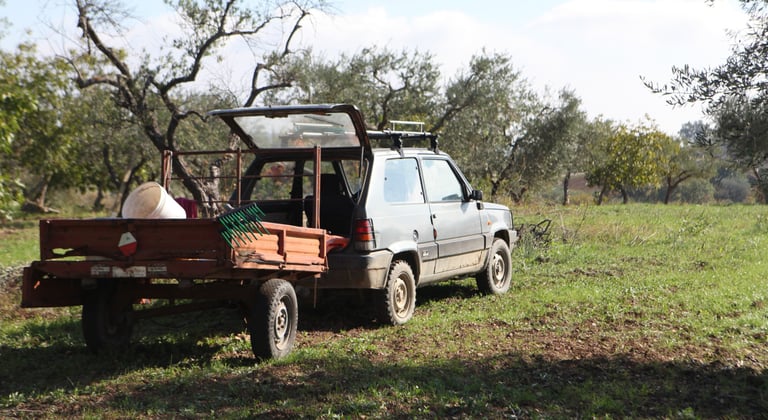
Throughout the year the countryside subtly changes color and activity. Wheat fields turn from green to gold. Tractors pass along rural roads. Olive groves fill with families gathering fruit. These are ordinary sights here, yet they quietly remind visitors that this remains a working agricultural landscape, not simply a scenic backdrop.
Over time, these seasonal shifts become one of the defining textures of living in an Italian village.
Seasonal Food Traditions
Food in Grottole follows the same rhythm as the land. What people eat is shaped less by preference than by what is growing, harvested, or preserved at any given time.
Certain ingredients arrive with a sense of anticipation shared across the village.
For those interested in slow food traditions in Italy, this connection between season and cuisine is one of the most distinctive aspects of village life.
Spring: The Return of the Land
Spring marks a quiet reawakening in Grottole.
After the stillness of winter, activity begins to return to the countryside. Gardens are cleared and prepared, fields are worked again, and the first signs of new growth begin to appear. The shift is subtle at first, but noticeable — in both the landscape and daily conversation. This is the season of anticipation.
The first fava beans arrive, often eaten fresh with pecorino, marking one of the earliest tastes of the new cycle. Wild asparagus begins to appear along the edges of fields and hillsides, gathered by those who know where to look. These ingredients are simple, but they carry a particular significance — they signal that the year has begun again.
Meals during this time reflect that transition. Dishes become lighter and more immediate, built around what is newly available rather than what has been preserved. The connection between land and table feels especially direct in these early months.
Spring is also a season of preparation. Much of the work happening now is not for immediate consumption, but for what will follow in summer and autumn. Seeds are planted, vines are tended, and olive trees are pruned — quiet tasks that set the foundation for the months ahead.
For visitors, this period offers a different perspective on slow living in Italy. It is less about visible harvest and more about renewal — a time when life begins to move outward again, guided by the same rhythms that have shaped the village for generations.
Summer: Preserving the Harvest
Summer brings some of the most visible food traditions in the village.
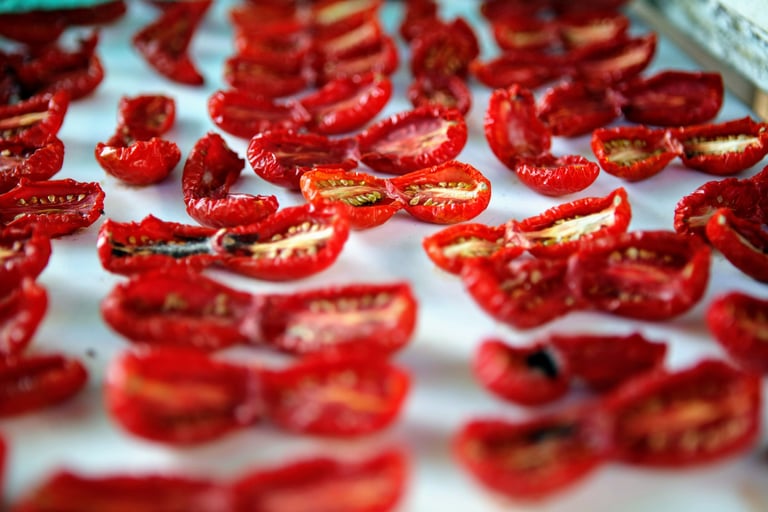
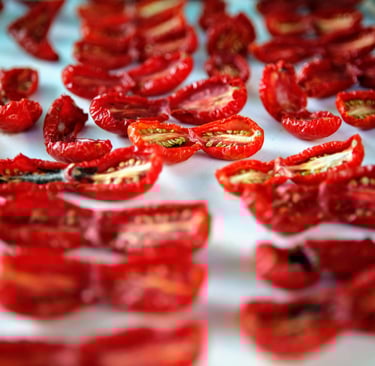
Tomatoes are harvested in large quantities and slowly reduced into passata, often in large copper pots set over wood or gas fires outdoors. Families gather to prepare sauce for the year ahead, repeating a process that has remained largely unchanged for generations.
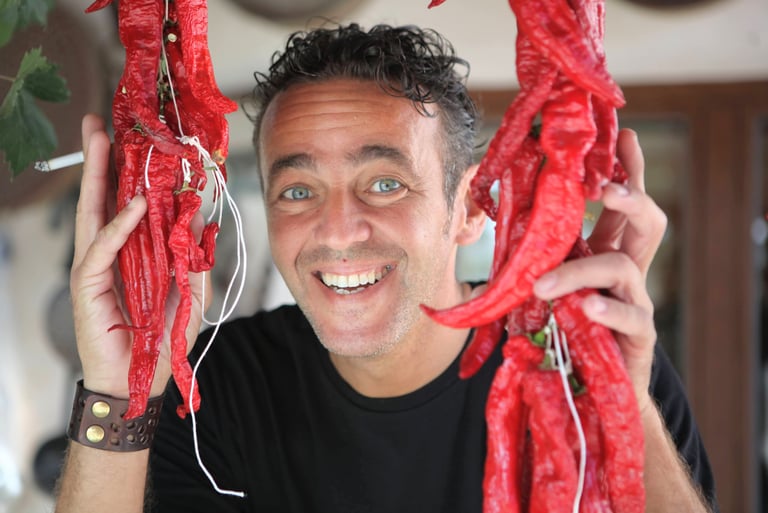
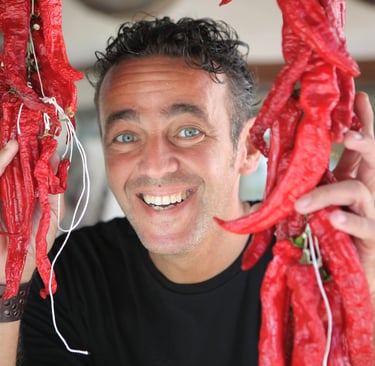
At the same time, balconies and doorways fill with strings of drying peppers destined to become peperoni cruschi, one of the most iconic foods of Basilicata. Briefly fried, these thin peppers become crisp and intensely flavorful.
Across the village similar scenes appear simultaneously: vegetables drying outdoors, neighbors preparing ingredients together, and nonnas seated outside their homes shelling fava beans while talking with friends nearby.
Food preparation becomes both practical work and quiet social activity.
Autumn: Wine and Olive Oil
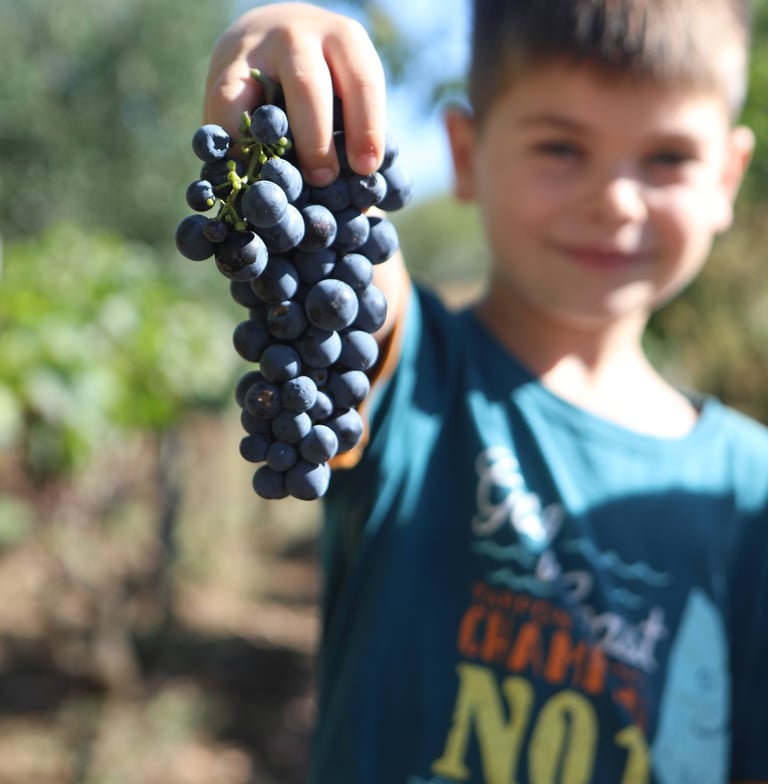
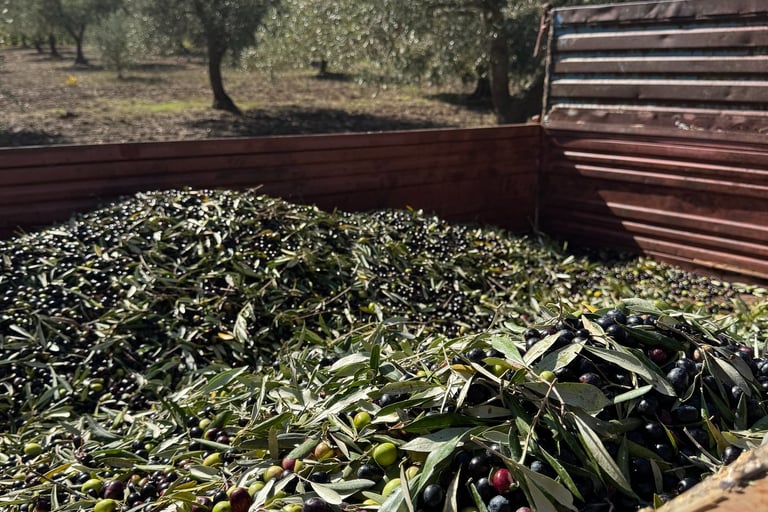
Autumn shifts attention toward two of the most important harvests in southern Italy: grapes and olives.
The grape harvest typically begins early in the morning and often involves several generations of a family working together. By late morning the grapes are brought to the cantina, where they are crushed and left to ferment. Eventually each family receives its share of wine for the year, stored in demijohns in cool underground cellars.
Soon after, the olive harvest begins. Families gather to collect olives by hand before bringing them to the local mill. The arrival of the year’s new olive oil is often met with genuine excitement. The first pressing is tasted immediately, then carefully stored for the months ahead.
Winter: Preservation and Tradition
Winter brings quieter traditions centered on preserved foods.
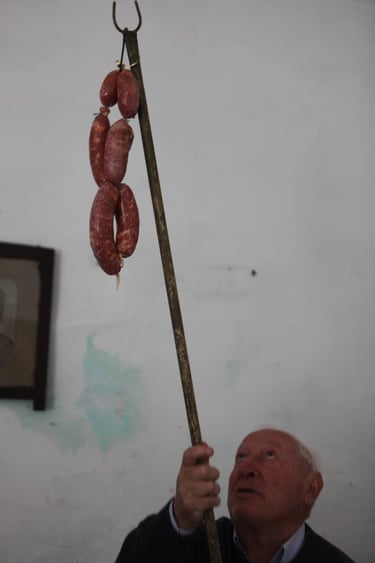
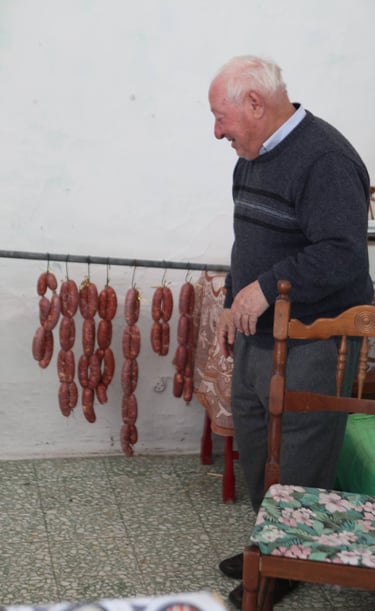
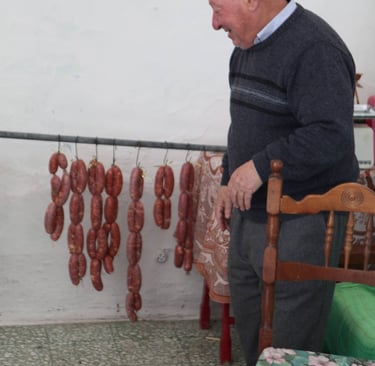
December often marks the making of cured sausages. This process is carried out collectively among families and neighbors. Recipes vary from household to household and are passed down through generations.
Meat is seasoned, ground, and stuffed while others assist nearby. Fires crackle in the background, creating warmth and atmosphere as the finished sausages hang to cure slowly over time.
What stands out about these traditions is their continuity. Recipes remain simple because the ingredients themselves already carry the labor of the season.
Festivals & Religious Traditions in Grottole
Seasonal rhythms in Grottole are not only agricultural. They are also shaped by the church calendar and long-standing religious traditions.
Throughout the year, festivals and feast days bring moments when the entire village gathers. Some celebrations are quiet and reflective, while others transform the town completely.
These events reveal Grottole at its most alive — rooted in faith, family, and community.
Festa Patronale di San Rocco
August 15–16
The Festa Patronale di San Rocco is the most important event of the year in Grottole.
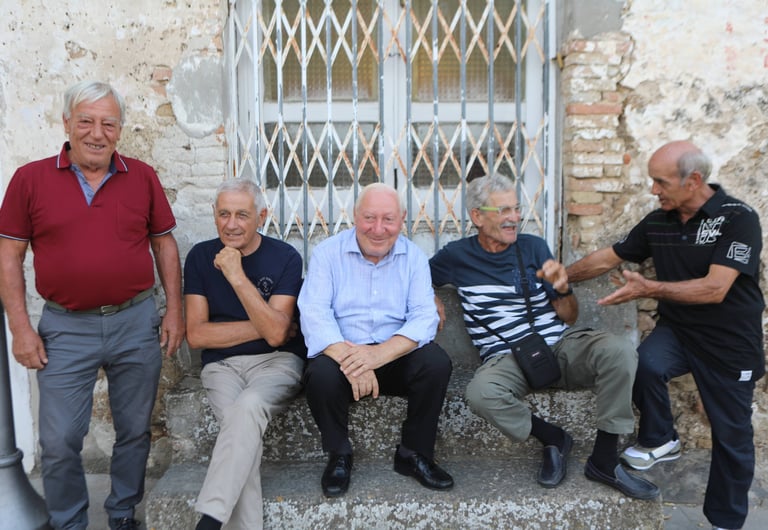
In mid-August, the town changes dramatically. Families who live elsewhere return home, extended relatives reunite, and houses that are only opened in summer come back to life. For many residents, this is the one moment each year when everyone gathers again.
During these days:
Streets remain lively from morning until late night
Locals walk in giro, slowly circling the town while greeting friends
People sit outside their homes talking well past midnight
The entire village feels animated by a shared sense of belonging
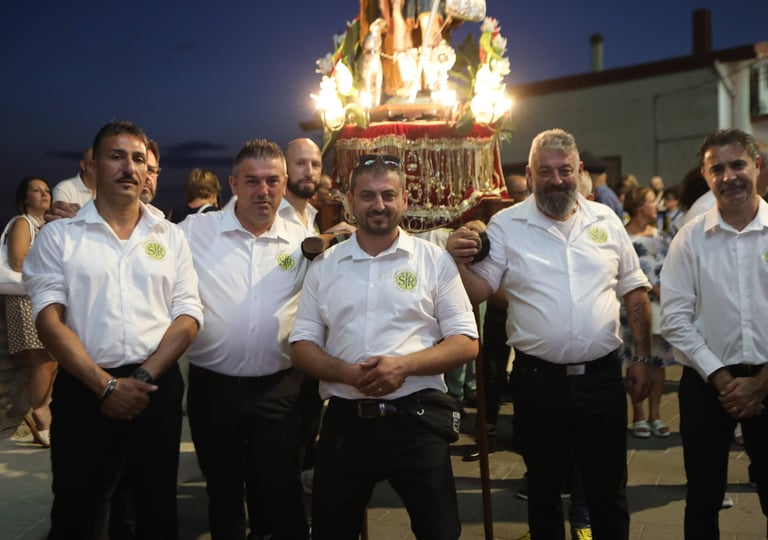
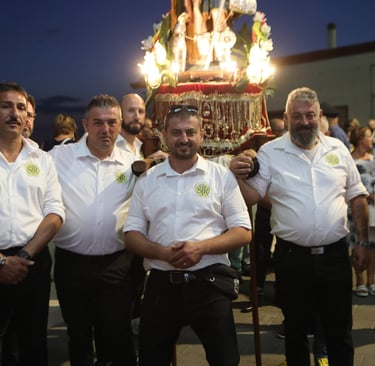
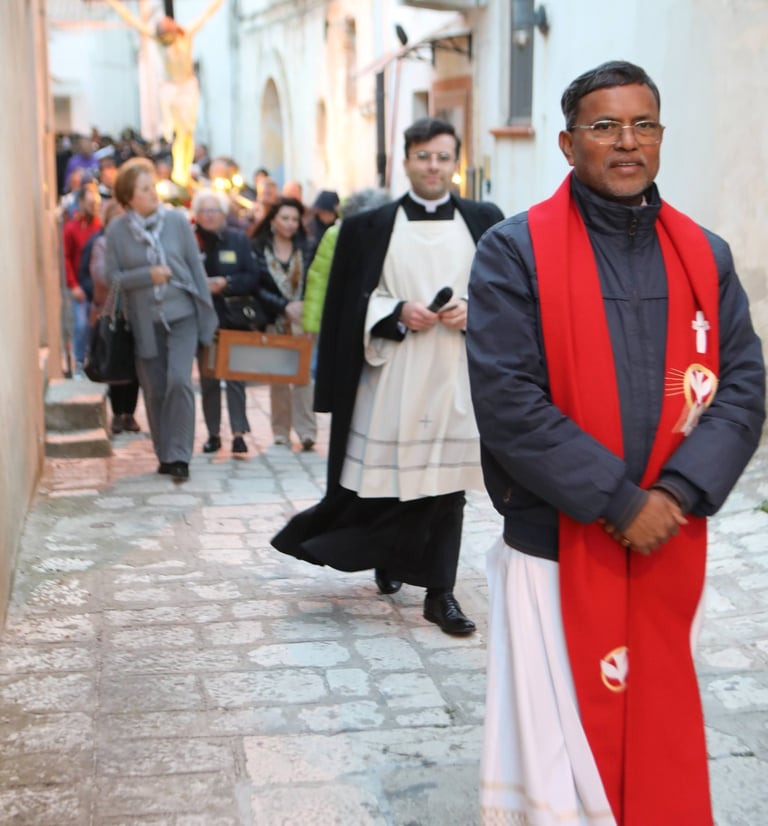
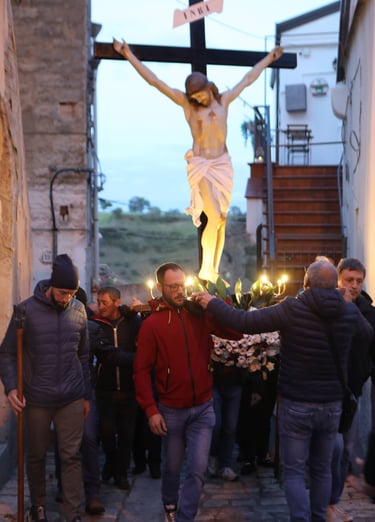
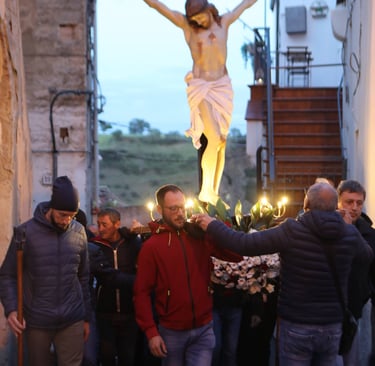
On August 16, the statue of San Rocco is carried in a solemn procession through the streets. Faith, tradition, and community come together in a powerful moment that is deeply personal to the people of the town.
For visitors, this celebration offers one of the most vivid glimpses into authentic Italian village life.
Other Annual Celebrations
Assunzione di Maria — August 15
Celebrated with Mass and prayer, this day marks the beginning of the San Rocco festivities and carries a quieter, reflective atmosphere.
Sant’Antonio Abate — January 16
A winter feast associated with rural life and the blessing of animals.
Festa del Crocifisso — May 3
A religious observance centered on the Holy Crucifix, marked by church services and parish gatherings.
Fiera di San Luca — October 13–14
A smaller but well-loved local fair historically connected to seasonal trade and rural markets.
Everyday Religious Life
Beyond major feast days, religious tradition remains woven into daily life in Grottole.
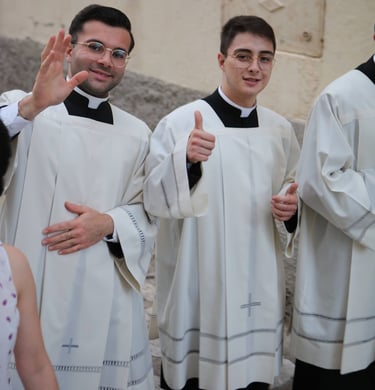
Holy Week and Easter are deeply observed with Masses and rituals. Christmas and Advent are quiet and family-focused. Saints’ days and novenas appear throughout the year, and occasional processions move through the streets during special occasions.
Churches in Grottole are not only places of worship. They are anchors of memory, continuity, and shared identity.
Experiencing the Rhythm of the Village
For visitors interested in slow travel in Italy, spending time in Grottole means encountering these rhythms naturally.
You might see tomatoes drying on balconies, neighbors preparing olives for the press, or a quiet evening procession moving through the streets. None of these events are staged. They simply reflect how life continues to unfold here.
Farm-to-table is not a concept or lifestyle trend in Grottole. It is simply how life has long functioned — a village where food, conversation, and celebration continue to follow the seasons.
Contact
For inquiries about life in Grottole.
© 2026 All rights reserved.
Iryna@lifeingrottole.com
Questions@lifeingrottole.com
Stay@lifeingrottole.com