
In southern Italy, going to the beach is less a tourist activity and more a seasonal ritual. During the warmer months, families and groups of friends pack into cars and spend long, unhurried days at the coast, returning to the village in the evening. In Grottole, the sea — roughly an hour away — becomes part of summer life without ever defining it.
Beach days are typically occasional rather than routine. They fit around village rhythms, agricultural work, and social obligations rather than replacing them. A trip to the coast is simply another expression of the season, much like evening walks or outdoor gatherings.
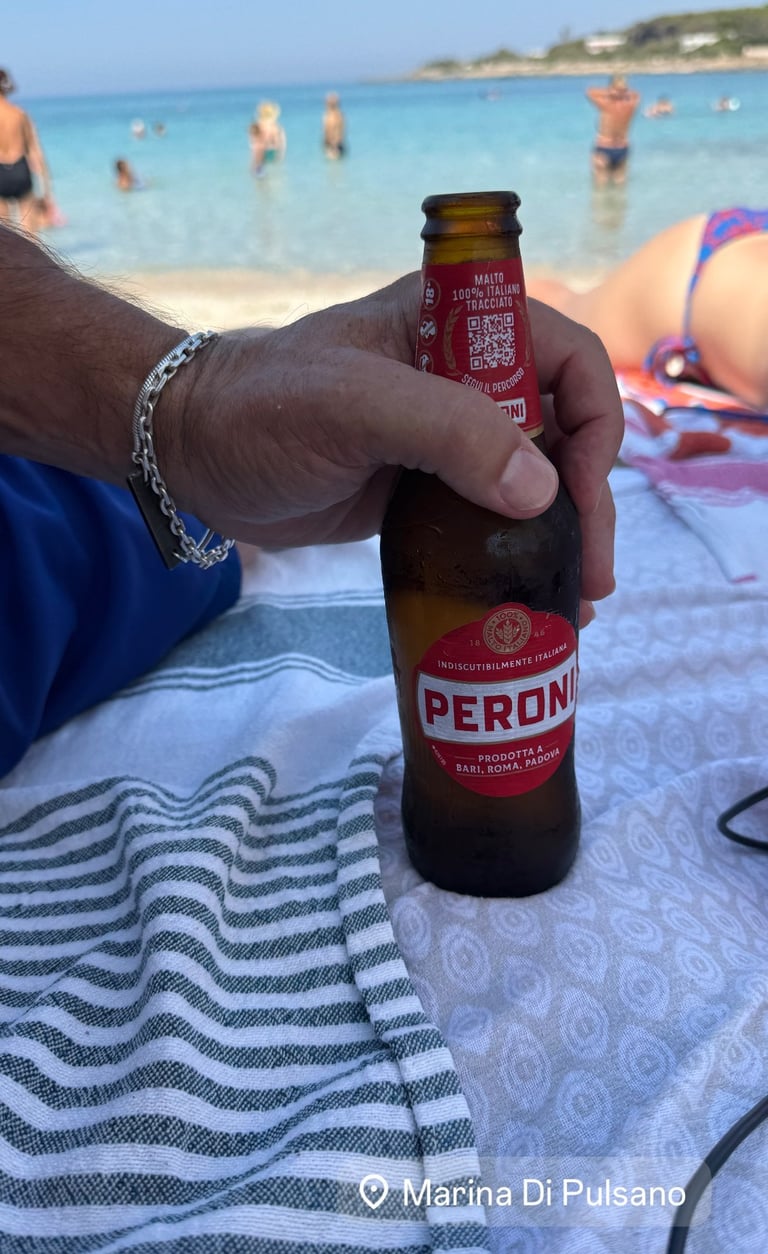
Many locals choose the nearest accessible beaches for practical day trips. For us, however, the preference has been to travel a bit farther toward the Ionian side of Puglia. The character of the water there is noticeably different — clear, calm, and vividly turquoise throughout much of the summer. The experience feels less like an excursion and more like a natural extension of the broader landscape that shapes life in this region.
Summer time at the sea also carries its own familiar customs. Along nearly every stretch of coastline, it is tradition to end a beach day with seafood — simple meals taken at one of the many casual restaurants near the water. Long lunches, grilled fish, and shared plates are as much a part of the experience as the swimming itself.
By evening, the rhythm shifts back to the village. Friends often reunite outdoors, lingering in conversation well into the night as the heat of the day fades. Balconies and clothes lines fill with drying beach towels, gently moving in the warm air — small, ordinary signs of a day spent at the coast.
What is perhaps most striking is how naturally the sea integrates into village living. It is close enough to be familiar, yet distant enough that daily life remains anchored inland. The village does not revolve around the coast, but the coast remains an ever-present possibility during the long southern summer.
Contact
For inquiries about life in Grottole.
© 2026 All rights reserved.
Iryna@lifeingrottole.com
Questions@lifeingrottole.com
Stay@lifeingrottole.com