
Food in Grottole is inseparable from season and landscape. What people eat is shaped less by preference and more by what is growing, harvested, or preserved at any given time of year.
What grows fresh in the garden is genuinely anticipated each season. The first fava beans in spring, wild asparagus foraged in the countryside, the heavy abundance of summer tomatoes, the return of dried peppers in winter — these are more than ingredients. They are seasonal events everyone recognizes and looks forward to.
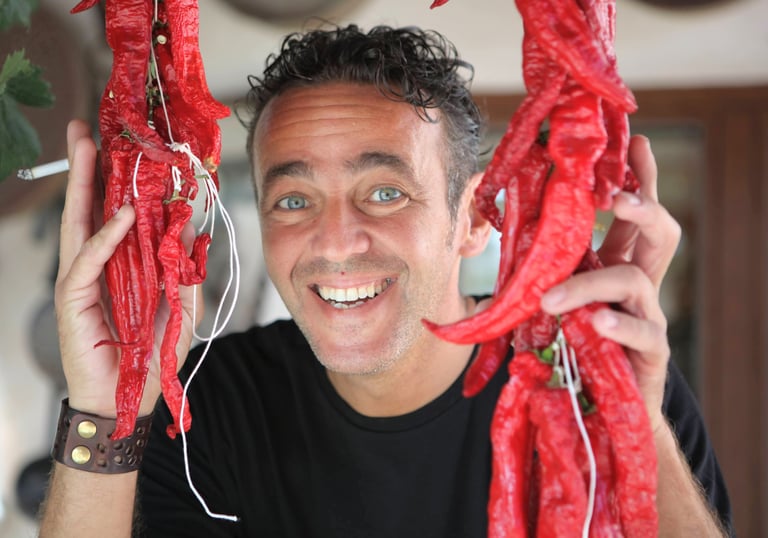
Summer, in particular, is a season of visible preparation. Tomatoes are harvested in large quantities and slowly reduced into passata, often in large copper pots set over wood or gas fires in the street, just as it has been done for generations. Throughout the village, balconies and doorways fill with hanging peppers destined to become peperoni cruschi — one of the most distinctive flavors of the region. Briefly fried, they carry both intensity and memory of the summer sun.
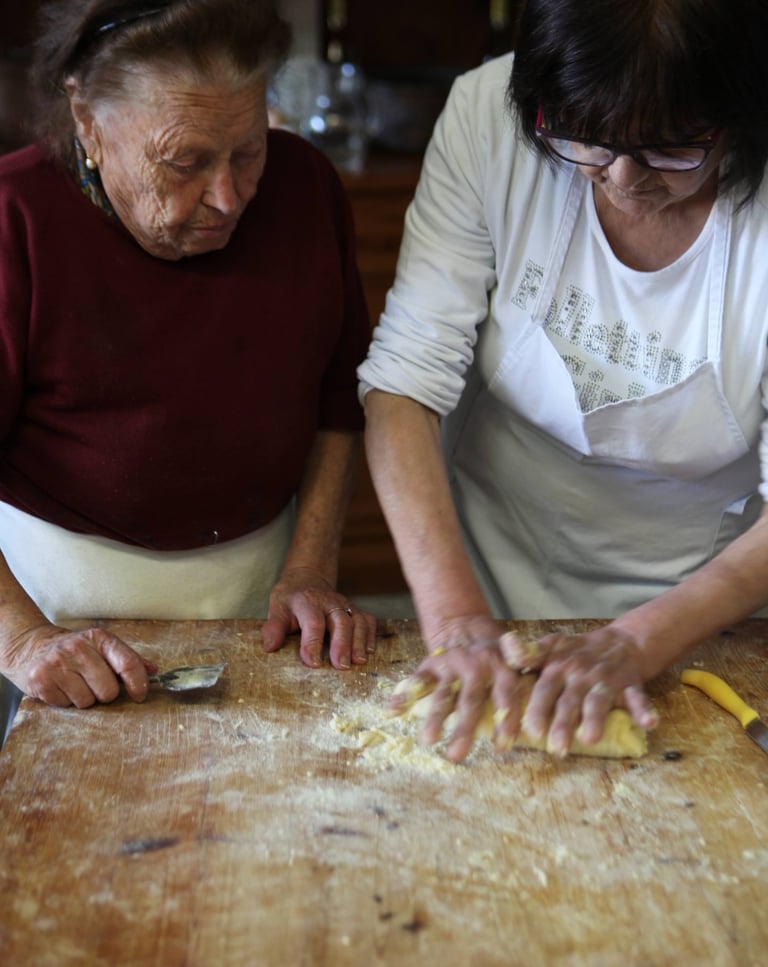
Everywhere you look, similar rituals unfold. Tomatoes drying outdoors. Fava beans being hulled by nonnas seated on chairs in front of their homes, often with a neighbor nearby doing the same. Food preparation becomes something both practical and quietly social, repeated across households at the same time.
Autumn shifts attention toward wine and olive oil. Grapes are gathered early in the morning, typically as a family effort. By late morning, the harvest moves to the cantina, where grapes are crushed and left to ferment. When the process is complete, each family member receives their allocated demijohns of wine for the year, stored carefully in these cool underground spaces.
The olive harvest follows a similar rhythm. Families reunite to collect olives by hand, a task treated with surprising seriousness and pride. Many people will pause other work to participate. Once pressed at the local mill, the arrival of new oil is met with genuine excitement — tasted immediately, then stored for the months ahead.
Winter brings its own traditions. Preserved foods sustain daily meals, and December often marks the making of cured sausages. This, too, is collective work. Recipes vary by family and are passed down from generation to generation. Meat is seasoned, then fed through hand-cranked tools while others assist. A fire crackles nearby — part cooking method, part atmosphere — and finished sausages hang to cure, lightly scented by smoke and time.
What stands out over the years is not culinary complexity but as has been done for generations. Recipes remain simple because the ingredients already carry labor, memory, and season. Farm-to-table here is not an idea or lifestyle choice. It is simply how life has long functioned.
Festivals & Religious Traditions in Grottole
Life in Grottole is deeply shaped by the rhythm of the church calendar and long-standing village traditions. Some celebrations are quiet and reflective; others completely transform the town. These moments reveal Grottole at its most alive — rooted in faith, family, and community.
The Most Important Event of the Year
Festa Patronale di San Rocco
Dates: August 15 & 16
Significance: Patron Saint of Grottole
This is the defining event of the year in Grottole.
In mid-August, the town changes completely. Families who live elsewhere return home, extended relatives reunite, and homes that are only opened in summer come back to life. For many, this is the one moment each year when everyone is together again.
During these days:
The streets are crowded from morning until late night
Locals walk in giro — slowly circling the town with friends, stopping to talk, laugh, and greet one another
People stay out late, sitting on steps, leaning out of doorways, socializing well past midnight
There is a strong sense of pride, belonging, and shared identity
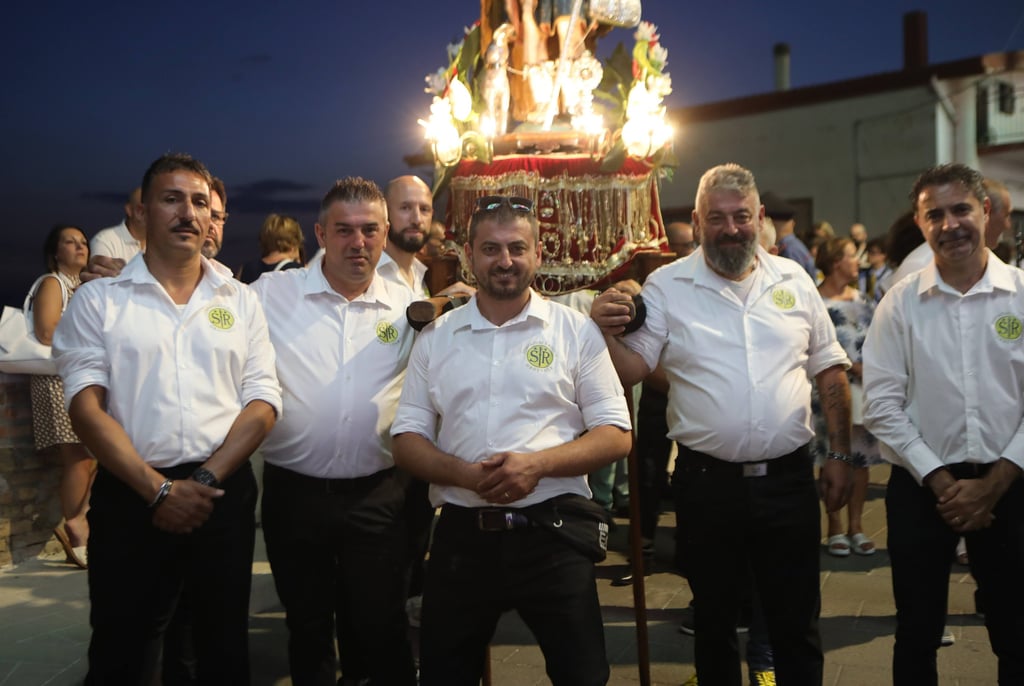
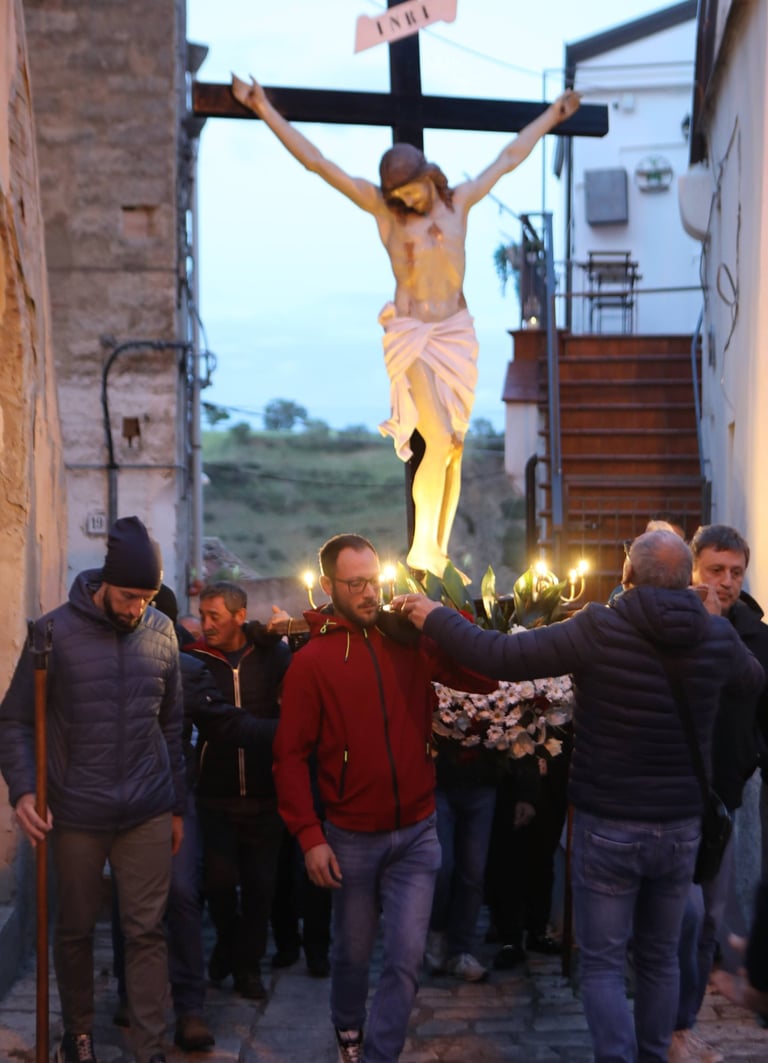
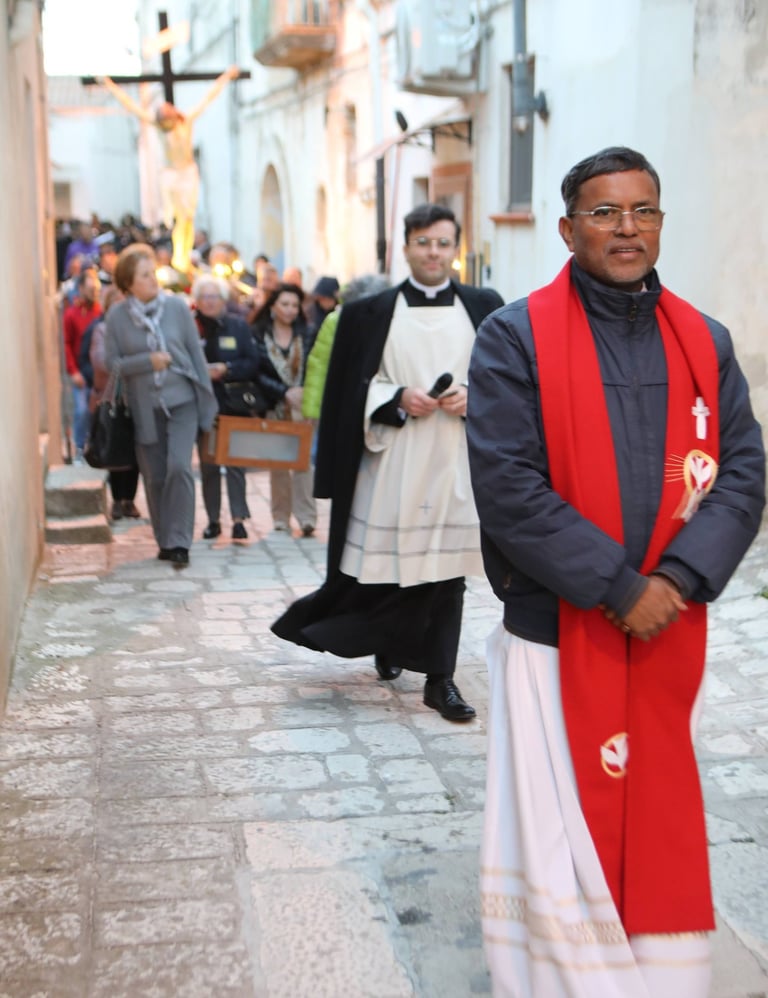
On August 16, the statue of San Rocco is carried in a solemn procession through the streets — a powerful moment where faith, tradition, and community come together. This is not a tourist spectacle; it is something deeply personal to the people of the town.
For anyone visiting, these days offer the most vivid glimpse into what village life truly means here.
Other Annual Religious Celebrations
Assunzione di Maria (Assumption of Mary)
Date: August 15
Celebrated with Mass and prayer
Closely tied to the opening of the San Rocco festivities
A quieter, reflective day before the height of celebration
Sant’Antonio Abate
Date: January 16
Traditional winter feast
Associated with rural life and the blessing of animals
Marked by church services and local devotion
Festa del Crocifisso
Date: May 3
Religious observance centered on the Holy Crucifix
Includes special Masses and parish gatherings
Reflects the spiritual heart of the community rather than public celebration
Fiera di San Luca
Dates: October 13 & 14
A smaller but well-loved local fair
Historically connected to seasonal rhythms and rural trade
Often includes food, informal markets, and community gatherings
Ongoing Religious Life in the Village
Beyond specific feast days, religious tradition is woven into everyday life in Grottole:
Holy Week & Easter – deeply observed with Masses and rituals
Christmas & Advent – quiet, family-focused, and centered around the church
Saints’ days & novenas – marked throughout the year
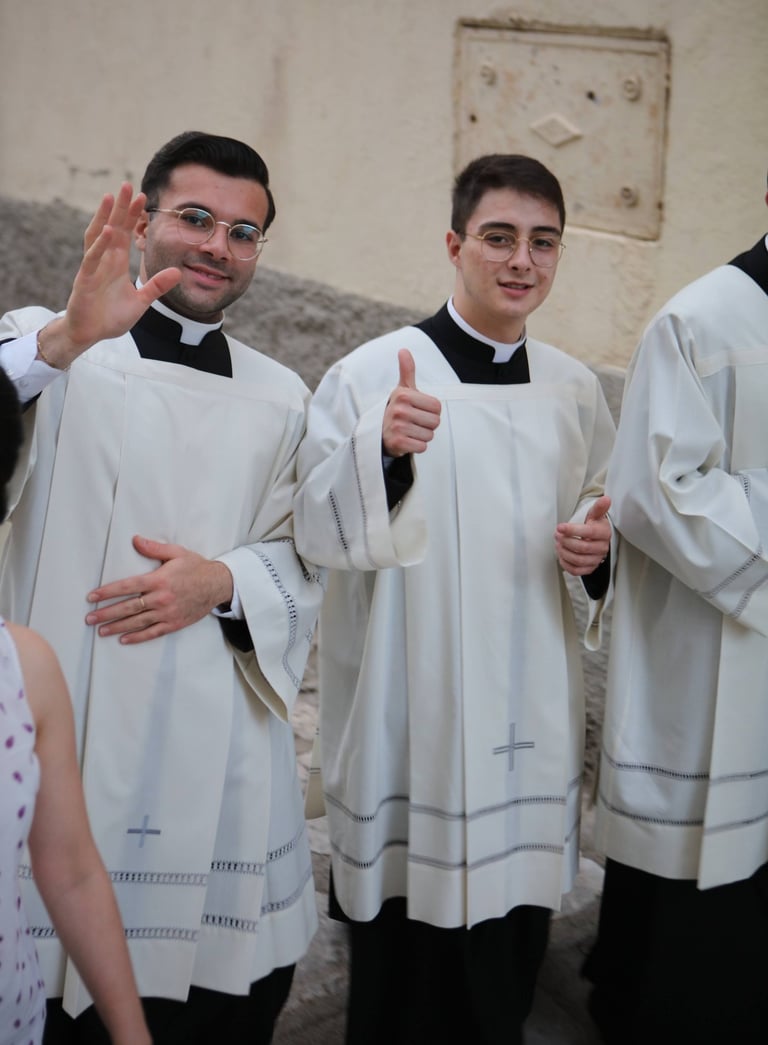
Processions – held on special occasions, reinforcing the shared life of the village
Churches are not just places of worship here — they are anchors of memory, tradition, and continuity.
A Note for Visitors
If you happen to be in Grottole during one of these celebrations — especially San Rocco — you are not just observing an event. You are stepping into a moment when the town feels whole again.
Contact
For inquiries about life in Grottole.
© 2026 All rights reserved.
Iryna@lifeingrottole.com
Questions@lifeingrottole.com
Stay@lifeingrottole.com